At a Glance: chuckle Synonyms and Related Alternatives
| Alternative | Part of Speech | Meaning | Register / Tone | Ideal Context |
|---|---|---|---|---|
| giggle | verb, noun | a light, silly laugh | everyday | describing light laughs |
| titter | verb, noun | a nervous giggle | neutral | describing nervous laughs |
| snicker | verb, noun | a sly, quiet laugh | everyday | describing sly laughs |
| chortle | verb, noun | a joyful chuckle-snort | everyday | describing joyful laughs |
| snigger | verb, noun | a sly laugh, British | everyday | describing sly laughs, British |
| snort | verb, noun | a sharp breath laugh | everyday | describing sharp laughs |
| bark | verb, noun | a short, sharp laugh | everyday | describing sharp laughs |
| splutter | verb, noun | a splashing laugh | everyday | describing messy laughs |
| hiccup | verb, noun | a jerky laugh sound | everyday | describing jerky laughs |
| crow | verb, noun | a cry of delight | everyday | describing delighted cries |
Which Word Should You Use?
| If you want to… | Use | Why |
|---|---|---|
| describe a soft laugh | giggle | it is the most common soft laugh |
| describe a knowing laugh | snicker | it hints at a secret joke |
| describe a joyful burst | chortle | it mixes chuckle and snort |
| describe a quiet laugh | titter | it is light and often nervous |
| describe a warm smile-laugh | grin | it is more smile than sound |
| describe a loud laugh | guffaw | it is the opposite scale, use for contrast |
| describe shared amusement | mirth | it names the feeling behind the laugh |
| describe a cheeky laugh | snigger | it is the British form of snicker |
A few rarer laughs fill the edges of the scale. A cackle is the harsh, loud laugh of delight or mockery, glee is the feeling behind it, and to exult is to laugh in triumph. A gurgle is the soft, bubbling laugh of a baby, cachinnation is the formal word for loud, hearty laughter, and teehee is the small, written giggle of a secret joke. To sniggle is to laugh in a sly, suppressed way, to twitter is to laugh in quick, light bursts, and a hee-haw is the old word for a donkey-like bray of laughter. To crack up is to lose control and laugh hard, to scream is the laughing cry of surprise, and to laugh softly is the plainest way to say chuckle itself.
Exploring the Multiple Meanings of “chuckle”
1. To Laugh Quietly
- Meaning: to laugh in a soft, restrained way.
- Explanation: This is the core verb sense: he chuckled at the joke, quietly and warmly.
- Example: She chuckled at his old joke.
2. A Quiet Laugh
- Meaning: the sound of a soft laugh.
- Explanation: As a noun, a chuckle is the sound itself: a warm chuckle escaped her.
- Example: He gave a soft chuckle.
3. To Show Quiet Amusement
- Meaning: to express amusement without a loud laugh.
- Explanation: A chuckle can be private: reading a funny line, you chuckle to yourself.
- Example: She chuckled to herself at the memory.
4. The Sound in Writing
- Meaning: a word writers use for gentle laughter.
- Explanation: In stories, chuckle tells readers the laugh was gentle, not a roar.
- Example: The old man chuckled and shook his head.
Sources: Merriam-Webster, Dictionary.com
Analyzing 25 chuckle Alternatives in Detail
Read the groups in order, or skip to the one that matches what you want to say: the words move from closest matches to looser cousins.
Gentle Laughs
1. giggle
– IPA: /ˈɡɪɡəl/ (US and UK)
– Definition: to laugh lightly, often in a silly way.
– Usage: A close synonym, often younger in feel.
– Example: The children giggled at the clown.
2. titter
– IPA: /ˈtɪtər/ (US and UK)
– Definition: to laugh quietly, often nervously.
– Usage: A close synonym, lighter than chuckle.
– Example: The class tittered at the mistake.
3. snicker
– IPA: /ˈsnɪkər/ (US and UK)
– Definition: to laugh quietly in a sly or disrespectful way.
– Usage: A related alternative, with a sly edge.
– Example: They snickered at the back of the class.
4. chortle
– IPA: /ˈtʃɔːrtl/ (US), /ˈtʃɔːtl/ (UK)
– Definition: to laugh with a joyful, snorting sound.
– Usage: A close synonym, coined by Lewis Carroll.
– Example: He chortled at the clever pun.
5. snigger
– IPA: /ˈsnɪɡər/ (US and UK)
– Definition: the British form of snicker.
– Usage: A related alternative, British spelling.
– Example: The boys sniggered behind the teacher.
Short and Breathless Laughs
6. snort
– IPA: /snɔːrt/ (US), /snɔːt/ (UK)
– Definition: to make a sudden noise through the nose when laughing.
– Usage: A related alternative, sharper than chuckle.
– Example: She snorted at the silly joke.
7. bark
– IPA: /bɑːrk/ (US), /bɑːk/ (UK)
– Definition: a short, sharp laugh like a bark.
– Usage: A related alternative, vivid and short.
– Example: He barked a laugh at the surprise.
8. splutter
– IPA: /ˈsplʌtər/ (US and UK)
– Definition: to laugh while spitting out words or drink.
– Usage: A related alternative, messy and funny.
– Example: He spluttered into his tea.
9. hiccup
– IPA: /ˈhɪkʌp/ (US and UK)
– Definition: a small, jerky sound, sometimes from laughing.
– Usage: A related alternative, only for jerky sounds.
– Example: She laughed until she hiccuped.
Happy Sounds
10. crow
– IPA: /kroʊ/ (US), /krəʊ/ (UK)
– Definition: to cry out in delight or triumph.
– Usage: A related alternative, often for babies or winners.
– Example: The baby crowed with delight.
11. whoop
– IPA: /wuːp/ (US and UK)
– Definition: to shout with joy.
– Usage: A related alternative, louder than chuckle.
– Example: The fans whooped at the goal.
12. cheer
– IPA: /tʃɪər/ (US and UK)
– Definition: to shout with joy or support.
– Usage: A related alternative, public and loud.
– Example: The crowd cheered the winner.

13. rejoice
– IPA: /rɪˈdʒɔɪs/ (US and UK)
– Definition: to feel or show great joy.
– Usage: A related alternative, formal and deep.
– Example: The town rejoiced at the news.
Louder Laughs, for Contrast
14. guffaw
– IPA: /ɡəˈfɔː/ (US), /ɡəˈfɔː/ (UK)
– Definition: to laugh loudly and coarsely.
– Usage: A related alternative, much louder than chuckle.
– Example: He guffawed at the slapstick scene.
15. belly laugh
– IPA: /ˈbeli læf/ (US and UK)
– Definition: a deep laugh from the belly.
– Usage: A related alternative, hearty and loud.
– Example: The joke earned a belly laugh.
16. roar
– IPA: /rɔːr/ (US and UK)
– Definition: to laugh very loudly.
– Usage: A related alternative, the loudest scale.
– Example: The audience roared with laughter.
17. howl
– IPA: /haʊl/ (US and UK)
– Definition: to laugh long and loudly.
– Usage: A related alternative, wild and loud.
– Example: They howled at the comedian’s act.
Smiles That Are Almost Laughs
18. smile
– IPA: /smaɪl/ (US and UK)
– Definition: to curve the mouth in pleasure.
– Usage: A related alternative, silent, not a laugh.
– Example: She smiled at the memory.
19. grin
– IPA: /ɡrɪn/ (US and UK)
– Definition: to smile broadly.
– Usage: A related alternative, broad and silent.
– Example: He grinned at the good news.
20. beam
– IPA: /biːm/ (US and UK)
– Definition: to smile radiantly.
– Usage: A related alternative, warm and silent.
– Example: She beamed with pride.
21. smirk
– IPA: /smɜːrk/ (US), /smɜːk/ (UK)
– Definition: to smile in a sly or self-satisfied way.
– Usage: A related alternative, sly in tone.
– Example: He smirked at his rival’s error.
Amusement Itself
22. amusement
– IPA: /əˈmjuːzmənt/ (US and UK)
– Definition: the feeling of finding something funny.
– Usage: A related alternative, naming the feeling.
– Example: Her amusement showed in her eyes.
23. merriment
– IPA: /ˈmerɪmənt/ (US and UK)
– Definition: joy and laughter.
– Usage: A related alternative, warm and old fashioned.
– Example: The party was full of merriment.
24. mirth
– IPA: /mɜːrθ/ (US), /mɜːθ/ (UK)
– Definition: amusement and laughter.
– Usage: A related alternative, literary rather than everyday.
– Example: The room rang with mirth.
25. hilarity
– IPA: /hɪˈlerəti/ (US and UK)
– Definition: extreme amusement.
– Usage: A related alternative, stronger than chuckle.
– Example: The show ended in hilarity.
Sources: Merriam-Webster, Dictionary.com
chuckle vs. giggle vs. guffaw
Chuckle sits in the middle of the laughter scale. Giggle is lighter and often younger or sillier, a quick, light laugh. Guffaw is the far end: loud, coarse, and impossible to miss. Chuckle is the quiet, warm middle, the laugh you give when something is funny but not uproarious.
| Word | How loud | Best use |
|---|---|---|
| chuckle | soft and warm | quiet amusement, stories |
| giggle | light and quick | children, silly moments |
| guffaw | loud and coarse | slapstick, big jokes |
Sources: Merriam-Webster, Dictionary.com
The scale runs from the quietest laugh to the loudest. To laugh softly is the bottom of the scale, a chuckle is one step up, and a cackle or a crack up sits at the top, where control is gone. Glee is the feeling that runs through all of them, and the words you choose tell the reader how loud the room got.
chuckle and Opposite/Paired Word Pairs
| Word | Paired Word | Note |
|---|---|---|
| chuckle | sob | a sob is crying, the opposite of laughing |
| giggle | groan | a groan shows displeasure, not fun |
| guffaw | whimper | a whimper is a small, sad sound |
| smile | frown | a frown turns the mouth down |
| mirth | gloom | gloom is dark and joyless |
| cheer | boo | a boo shows disapproval |
Opposites place laughter on its scale. If sob fits as the reverse of your sentence, you are writing about laughter, and chuckle will suit the quiet end of that scale.
Sources: Merriam-Webster, Dictionary.com
Related Articles
Common Word Partners of “chuckle”
| Pattern | Common Partners | Example |
|---|---|---|
| soft chuckle | soft, quiet, warm | He gave a soft chuckle. |
| chuckle at | at, over, about | She chuckled at the cartoon. |
| chuckle to oneself | to oneself, inwardly | He chuckled to himself. |
| a chuckle escaped | escaped, broke, rose | A chuckle escaped her. |
| chuckle and shake | and shake, and smile | He chuckled and shook his head. |
Sources: Merriam-Webster, Dictionary.com
Idiomatic Phrases Featuring “chuckle”
1. in stitches
- Meaning: laughing very hard..
- Example: The comedian had us in stitches.
2. a barrel of laughs
- Meaning: a person or thing that is very funny..
- Example: The old comedian was a barrel of laughs.
3. chuckle to oneself
- Meaning: to laugh quietly at one’s own thought. Chuckle to oneself works as a fixed expression, not as a classic idiom.
- Example: She chuckled to herself at the memory.
4. burst out laughing
- Meaning: to start laughing suddenly..
- Example: He burst out laughing at the joke.
Sources: Merriam-Webster, Dictionary.com
Word Formation of “chuckle”
Etymology & Structure
Chuckle comes from an old verb meaning to laugh in a broken or clucking way, related to cluck, the sound a hen makes. The word imitates the sound: a chuckle is a series of small, broken laughs.
Date and History
Chuckle has been in English since the 1500s as a verb for quiet laughter. Its noun use followed, and writers have long used it for the gentle, restrained laugh of a character who is amused but not overcome.
Word Class Variations
- chuckle (verb, noun): to laugh quietly, or the laugh itself.
- chuckling (verb form): laughing quietly, present participle.
- chuckled (verb form): laughed quietly, past tense.
- chuckler (noun, rare): a person who chuckles.
Sources: Merriam-Webster, Dictionary.com
Common Word-Choice Mistakes
- Wrong pairing: chuckle for a roaring laugh, correction: guffaw or roar for a loud laugh, chuckle is quiet.
- Wrong pairing: giggle for a grown man’s quiet laugh, correction: chuckle for a grown man’s quiet laugh, giggle is lighter.
- Wrong pairing: snicker for warm, kind laughter, correction: chuckle for kind laughter, snicker is sly.
- Wrong pairing: smile for a sound, correction: chuckle for a sound, smile is silent.
- Wrong pairing: guffaw for a polite laugh, correction: chuckle for a polite laugh, guffaw is coarse.
- Wrong pairing: mirth for a single laugh, correction: chuckle for a single laugh, mirth for the feeling.
- Wrong pairing: chortle for a sad laugh, correction: chuckle for a mild laugh, chortle is joyful.
Frequently Asked Questions
Is chuckle a noun or a verb?
Both. As a verb it means to laugh quietly, and as a noun it names that quiet laugh.
What is the difference between chuckle and giggle?
A giggle is lighter and often sillier, while a chuckle is warmer, quieter, and more restrained.
Can I use chuckle in a story or an essay?
Yes. For stories, chuckle creates mood fast; for essays, pair it with a clear reason or example.
What is a softer word for chuckle?
Hilarity is a gentler choice when chuckle sounds too strong for the situation.
Which alternative should a learner start with?
Start with giggle and titter. They are common, easy to pronounce, and understood in almost every context where chuckle fits.
Where does chuckle come from?
It imitates a small, broken laugh, related to cluck, and has been used since the 1500s.
What is another word for chuckle?
Giggle, titter, and snicker are the most common choices, and each one shades the meaning a little differently.
What mistake do people often make with chuckle?
The common slip is using it for a mild case where a softer word like hilarity would fit better, or pairing it with a word that pulls the sentence in the opposite direction.
Does chuckle work in formal writing?
Yes, as long as the context fits. In very formal text, titter or snigger may read more smoothly than chuckle itself.
What is the opposite of chuckle?
One clear opposite is sob, which reverses the feeling or quality that chuckle describes.

Conclusion
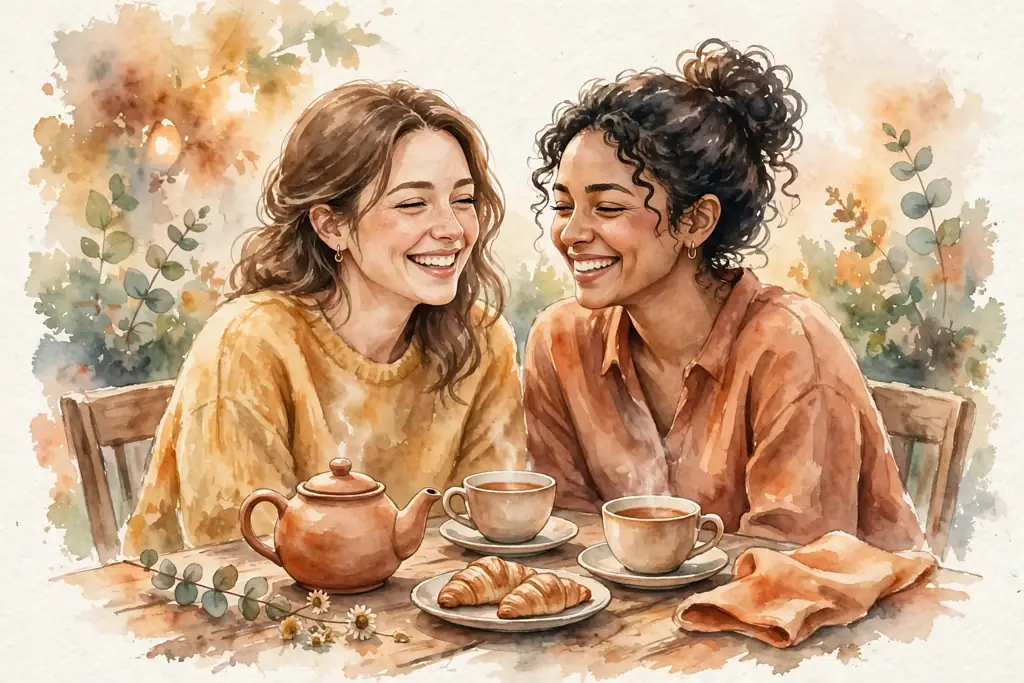
Chuckle is the quiet middle of laughter: warmer than a smile, softer than a guffaw, and just right for the moments when something is funny without being uproarious. Its alternatives let you place every laugh on that scale.
The choice depends on who laughs and how. Giggle fits light, silly moments, snicker fits sly ones, and guffaw fits the loud ones, while chuckle stays the safe, warm default for adult amusement.
With 25 alternatives in hand, you can now write laughter with the right volume, from a soft chuckle over tea to a roaring crowd, and let readers hear exactly how funny the moment was.

I am Sajjad Ali, an English language writer specializing in synonyms, word meanings, and practical English usage.
I use my expertise in English vocabulary and word choice to create simple, accurate, and helpful content for learners and readers.