
At a Glance: core Synonyms and Related Alternatives
| Alternative | Part of Speech | Meaning | Register / Tone | Ideal Context |
|---|---|---|---|---|
| heart | noun | the emotional or vital center | warm, literary-leaning | people, causes, stories |
| center | noun | the middle point or part | neutral | space, organizations |
| essence | noun | the essential nature of a thing | formal, literary | ideas, arguments, art |
| nucleus | noun | a central group or thing | formal, technical | groups, science |
| crux | noun | the decisive or most important point | formal | arguments, problems |
| gist | noun | the main point or general sense | neutral, informal-leaning | summaries, speech |
| kernel | noun | the central, essential part | neutral, slightly literary | ideas, truth |
| central | adjective | at the center; most important | neutral | analysis, description |
| fundamental | adjective | forming the base | formal | principles, systems |
| key | adjective | most important | neutral | everyday speech and writing |
Which Word Should You Use?
| If you want to… | Use | Why |
|---|---|---|
| Name the middle of a place | center / middle | They are the plain physical words |
| Talk about feelings or loyalty | heart | It carries the emotional weight core can imply |
| Summarize an argument’s point | crux / gist | Crux is formal, gist is conversational |
| Describe the essential nature | essence | It is the precise word for “what makes it what it is” |
| Name a central group of people | nucleus / hard core | Both fit committed inner circles |
| Sound formal about basics | fundamental / central | They suit reports and analysis |
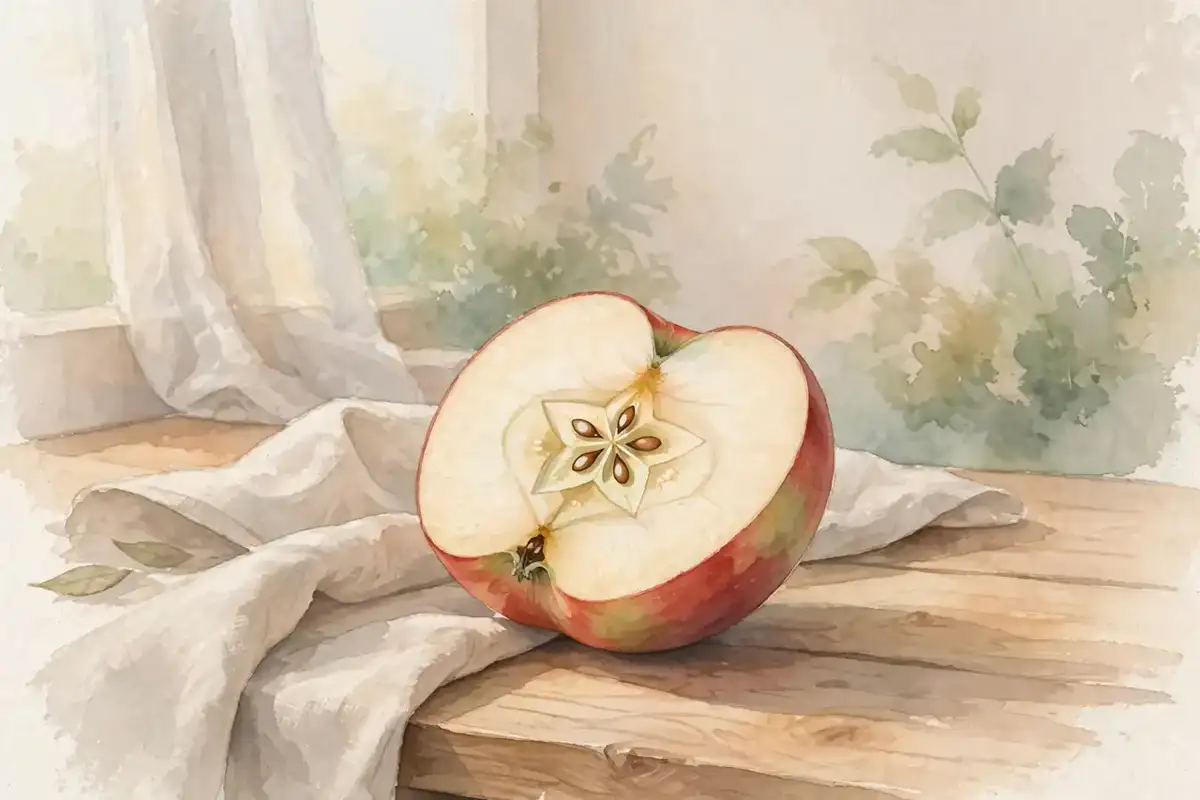
| Describe an apple’s middle | core (keep it) | No synonym beats the original for fruit |
| ## Exploring the Multiple Meanings of “core” |
1. The central part of a fruit
- Meaning: The inedible middle of an apple, pear, or similar fruit, containing the seeds.
- Explanation: This is the oldest and most literal sense. It is the one place where core has no true rival.
- Example: She cut out the core before slicing the apple.
2. The central or most important part of anything
- Meaning: The middle point, or the part everything else is built around.
- Explanation: This broadened sense applies to places, organizations, and systems, from city cores to reactor cores.
- Example: The historic core of the city dates back centuries.
3. The inmost, essential nature
- Meaning: The essential quality that makes something what it is.
- Explanation: A figurative sense used for issues, beliefs, and character, as in “the core of the problem.”
- Example: Generosity is at the core of her character.
4. A central group of people
- Meaning: The committed inner circle of a movement, team, or group.
- Explanation: Often phrased as “hard core,” this sense describes the members who never leave.
- Example: A hard core of volunteers kept the charity running.
5. To remove the core (verb)
- Meaning: To cut the inedible center out of a fruit.
- Explanation: The verb is narrow and practical, used almost only in cooking.
- Example: Core the pears, then poach them in wine.
Sources: Merriam-Webster, Dictionary.com, Etymonline
Analyzing 24 core Alternatives in Detail
Some words below are true synonyms; others are related alternatives tied to a single sense. The usage notes spell out the distinction.
Center and Middle
1. heart
IPA: /hɑːrt/ US · /hɑːt/ UK
Definition: The emotional or vital center of something.
- Usage: The warmest substitute for the figurative center. It adds feeling that core often lacks.
- Example: The old theater is the heart of the neighborhood.
2. center
IPA: /ˈsentər/ US · /ˈsentə/ UK
Definition: The middle point or part of something.
- Usage: The plainest physical synonym. Note the spelling split: center (US), centre (UK).
- Example: Place the vase in the center of the table.
3. middle
IPA: /ˈmɪdl/ (US and UK)
Definition: The point or part equally distant from the ends or sides.
- Usage: A simple, everyday word for the spatial middle. Less formal than center.
- Example: He stood in the middle of the road.
4. hub
IPA: /hʌb/ (US and UK)
Definition: The central part around which things revolve or connect.
- Usage: A related alternative that adds the idea of connection and activity, as in “a hub of trade.”
- Example: The station is the hub of the city’s transport.
5. midpoint
IPA: /ˈmɪdpɔɪnt/ (US and UK)
Definition: The exact middle point of something.
- Usage: A precise related alternative for measurable middles, such as journeys or timelines.
- Example: We stopped at the midpoint of the trail for lunch.
Inner Essence
6. nucleus
IPA: /ˈnuːkliəs/ (US and UK)
Definition: The central part around which other parts gather; a central group.
- Usage: A formal synonym for the central-group and science senses. Its plural is nuclei.
- Example: A small nucleus of researchers started the project.
7. kernel
IPA: /ˈkɜːrnəl/ US · /ˈkɜːnəl/ UK
Definition: The central or essential part of something.
- Usage: A slightly literary synonym for the essential-part sense, as in “a kernel of truth.”
- Example: There is a kernel of truth in his complaint.
8. essence
IPA: /ˈesəns/ (US and UK)
Definition: The intrinsic nature of something; what makes it what it is.
- Usage: The precise word for the “essential nature” sense. More abstract than core.
- Example: The essence of the story is forgiveness.
9. crux
IPA: /krʌks/ (US and UK)
Definition: The decisive or most important point of an issue.
- Usage: A formal synonym for the pivotal-point sense, as in “the crux of the matter.”
- Example: The crux of the debate is funding.
10. gist
IPA: /dʒɪst/ (US and UK)
Definition: The main point or general sense of something said or written.
- Usage: A conversational synonym for the summary sense. Less formal than crux.
- Example: I missed the talk, so give me the gist.
11. nub
IPA: /nʌb/ (US and UK)
Definition: The central point or essence of a matter.
- Usage: An informal, slightly British-leaning synonym, as in “the nub of the issue.”
- Example: You have hit the nub of the problem.
12. pith
IPA: /pɪθ/ (US and UK)
Definition: The essential part; the spongy tissue in plant stems.
- Usage: A literary synonym for the essential-substance sense. Also the literal plant tissue.
- Example: His speech had real pith.
13. meat
IPA: /miːt/ (US and UK)
Definition: The essential or substantial part of something.
- Usage: An informal related alternative, as in “the meat of the argument.” Best in casual writing.
- Example: Let us get to the meat of the proposal.
Spirit and Substance
14. substance
IPA: /ˈsʌbstəns/ (US and UK)
Definition: The essential part or meaning of something.
- Usage: A formal synonym for the meaningful-content sense, as in “the substance of his speech.”
- Example: The report lacked real substance.
15. soul
IPA: /soʊl/ US · /səʊl/ UK
Definition: The spiritual or emotional essence of a person or thing.
- Usage: A literary synonym for the deepest-nature sense. It adds a spiritual tone.
- Example: Music is the soul of this festival.
16. marrow
IPA: /ˈmæroʊ/ US · /ˈmærəʊ/ UK
Definition: The inmost, essential part; literally the soft tissue inside bones.
- Usage: A literary synonym, as in “chilled to the marrow.” It stresses depth.
- Example: The cold seeped into his marrow.
17. focus
IPA: /ˈfoʊkəs/ US · /ˈfəʊkəs/ UK
Definition: The center of interest or activity.
- Usage: A related alternative for the attention-center sense rather than the physical middle.
- Example: The new policy became the focus of debate.
18. epicenter
IPA: /ˈepɪsentər/ US · /ˈepɪsentə/ UK
Definition: The central point of something, originally of an earthquake.
- Usage: A related alternative, best for the figurative “center of activity.” Its literal sense is seismic.
- Example: The city became the epicenter of the art scene.
Adjective Forms
19. central
IPA: /ˈsentrəl/ (US and UK)
Definition: At the center; of the greatest importance.
- Usage: The standard adjective for the middle-or-main sense.
- Example: The port plays a central role in trade.
20. fundamental
IPA: /ˌfʌndəˈmentl/ (US and UK)
Definition: Forming a necessary base; essential.
- Usage: A formal adjective synonym for the foundation sense.
- Example: These are fundamental questions.
21. key
IPA: /kiː/ (US and UK)
Definition: Most important; essential.
- Usage: A short everyday adjective for the most-important sense.
- Example: Timing is key to the plan’s success.
22. main
IPA: /meɪn/ (US and UK)
Definition: Chief in size, extent, or importance.
- Usage: A plain adjective synonym for the principal sense. (See also our guide to another word for main, coming in this series.)
- Example: The main entrance is on the north side.
23. essential
IPA: /ɪˈsenʃl/ (US and UK)
Definition: Absolutely necessary; central to being.
- Usage: A direct adjective synonym for the necessary-part sense.
- Example: Rest is essential to recovery.
24. primary
IPA: /ˈpraɪmeri/ US · /ˈpraɪməri/ UK
Definition: First in rank or importance.
- Usage: A formal adjective synonym for the first-rank sense.
- Example: Our primary goal is safety.
Sources: Merriam-Webster, Dictionary.com, Collins Dictionary

Core vs. Heart vs. Center: What Is the Difference?
| Word | Core idea | Example | Best for |
|---|---|---|---|
| core | the part you cannot remove | the core of the issue | essentials, groups, fruit |
| heart | the emotional center | the heart of the community | feelings, loyalty, life |
| center | the physical middle | the center of town | space, geometry, organizations |
Core stresses necessity, heart stresses feeling, and center stresses position. An apple has a core, a town has a center, and a team has a heart.
Sources: Merriam-Webster, Collins Dictionary
core and Opposite/Paired Word Pairs
| Word | Paired Word | Note |
|---|---|---|
| core | periphery | center vs. outer edge, in analysis and anatomy |
| center | edge | middle vs. boundary |
| inside | outside | inner part vs. outer part |
| essence | appearance | true nature vs. surface look |
| main | side | principal vs. secondary, as in a main dish and side dish |
Each pair matches one sense of core, from geometry to character.
Sources: Merriam-Webster, Dictionary.com
Related Articles
Common Word Partners of “core”
| Pattern | Common Partners | Example |
|---|---|---|
| core values | company, family | Honesty is one of our core values. |
| core strength | fitness, team | The workout builds core strength. |
| core group | of supporters, team | A core group stayed late to finish. |
| at the core | of, the issue | At the core, it is a question of trust. |
| core business | company, focus | They sold off non-core business units. |
| core curriculum | school, college | Math is part of the core curriculum. |
| core temperature | body, reactor | His core temperature dropped dangerously. |
| to the core | shaken, rotten | The news shook her to the core. |
Sources: Collins Dictionary, Merriam-Webster
Idiomatic Phrases Featuring “core”
1. to the core
- Meaning: Completely; through every part of one’s being.
- Example: She was a teacher to the core.
2. rotten to the core
- Meaning: Thoroughly bad or corrupt in character.
- Example: The whole scheme was rotten to the core.
3. hard core
- Meaning: The most committed or extreme members of a group; also an adjective for intense dedication. (An established expression.)
- Example: A hard core of fans waited in the rain.
4. the core of the matter
- Meaning: The central or most important part of an issue. (An established expression.)
- Example: Let us get to the core of the matter.
Sources: Merriam-Webster, Collins Dictionary
Word Formation of “core”
Etymology & Structure
Core appeared in the early 14th century meaning “heart or inmost part of anything,” especially of an apple or pear. Its origin is uncertain, but it probably comes from Old French cor or coeur, “heart,” from Latin cor, “heart,” which traces back to the Proto-Indo-European root kerd-, “heart.” The verb “to remove the core of” a fruit is recorded from the mid-15th century.
Date and History
The noun is recorded from the early 14th century for fruit and general centers. The sense “central portion cut and removed” (as in a core sample) dates to the 1640s, and the nuclear physics sense (reactor core) to 1949.
Word Class Variations
- Noun: core (the core of the apple)
- Verb: core (core the apples)
- Adjective: core (core values), hard-core
- Related noun: corps (a body of people; pronounced “core” but unrelated in origin)
- Related noun: corpus (a body of work)
Sources: Etymonline, Merriam-Webster
Common Word-Choice Mistakes
- The corps of the apple (wrong word): the core of the apple; corps is a body of troops.
- He is the corps of the team (wrong word): he is the core of the team.
- The main core issue (redundant): the core issue, or the main issue.
- Corpse values (spelling): core values; a corpse is a dead body.
- At the corps of the matter (wrong word): at the core of the matter.
- She cored out the apple (wordy but acceptable): she cored the apple is cleaner.
- The hard corps fans (spelling): the hard core fans.
Frequently Asked Questions
1. What is the closest synonym for core?
Heart for the emotional center, center for the physical middle, and essence for the essential nature.
2. What is the difference between core and center?
Core stresses the essential part you cannot remove; center stresses the middle position.
3. What is a formal alternative to core?
Essence, nucleus, or crux, depending on whether you mean nature, group, or decisive point.
4. What is the opposite of core?
Periphery for the outer edge, surface for the outer layer, and edge for the boundary.
5. Can core be used for people?
Yes, for a committed inner group (“a hard core of supporters”) and for character (“kind to the core”).
6. What is the difference between core and heart?
Core is about necessity and structure; heart adds emotion and life.
7. Is “corps” pronounced the same as “core”?
Yes, corps is pronounced “core,” but it means a body of troops or workers and is unrelated.
8. What is a poetic alternative to core?
Soul or marrow, both literary words for the deepest essence.
9. Can core be a verb?
Yes, meaning to remove the inedible center of a fruit.
10. What does “hard core” mean?
The most dedicated members of a group, or as an adjective, intensely committed.
Conclusion
The closest answers are heart for the emotional center, center for the physical middle, essence for the essential nature, and nucleus for a committed group. Each one fits a different corner of core’s meaning.
Context picks the winner. An apple has a core, a city has a center, a cause has a heart, and an argument has a crux. Match the sense and the register, and the sentence takes care of itself.
Keep testing each replacement in a full sentence, and keep growing your vocabulary with another word for basic, another word for present, another word for through, and another word for better.

I am Sajjad Ali, an English language writer specializing in synonyms, word meanings, and practical English usage.
I use my expertise in English vocabulary and word choice to create simple, accurate, and helpful content for learners and readers.








One Comment