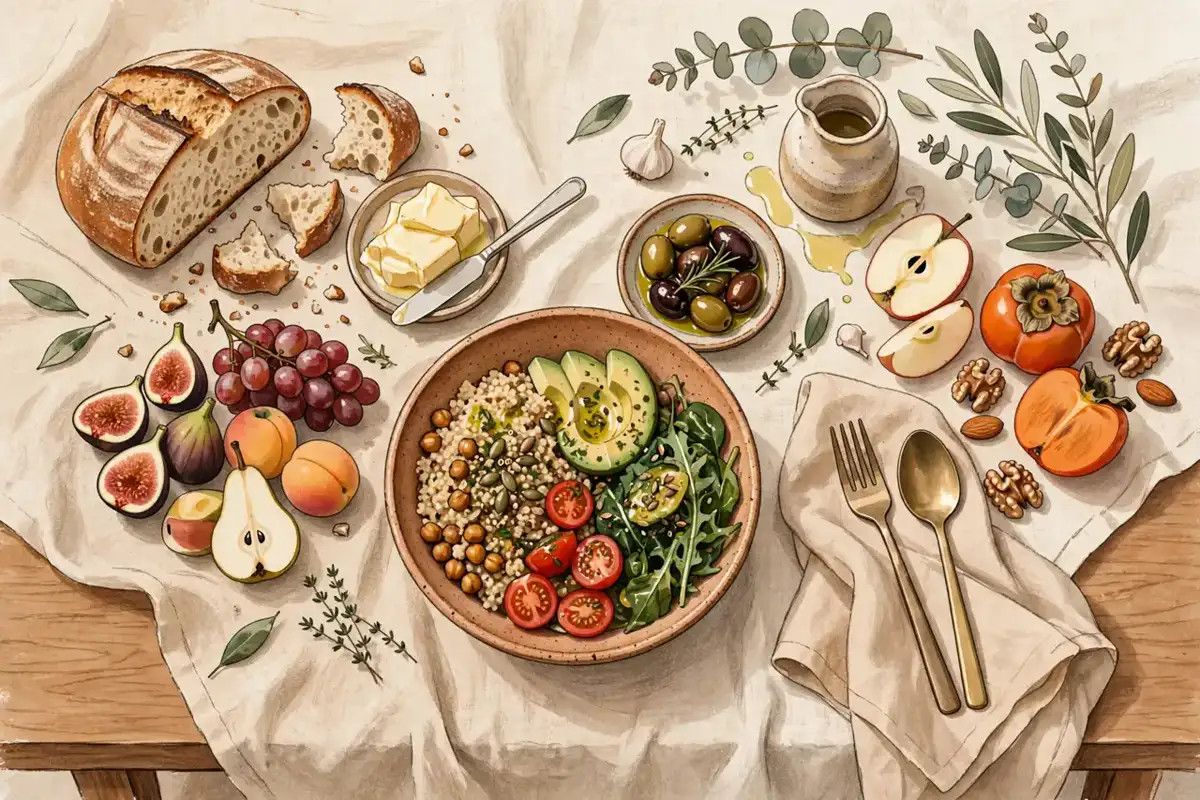
At a Glance: eating Synonyms and Related Alternatives
Dining (a formal meal), feasting (a grand celebratory meal), snacking (small bites between meals), munching (steady chewing), devouring (eating fast and eagerly), savoring (enjoying slowly), consuming (the formal term), nibbling (tiny bites), gorging (eating to excess), and picnicking (eating outdoors) give you ten precise ways to say eating.
Which Word Should You Use?
| If you want to… | Use | Why |
|---|---|---|
| Sound formal or elegant | dining | It suggests a proper sit-down meal |
| Describe a celebration meal | feasting | It implies abundance and joy |
| Describe small in-between bites | snacking | It is the everyday word for it |
| Describe eating fast | devouring | It captures speed and eagerness |
| Describe enjoying flavor | savoring | It means tasting with pleasure |
| Write scientifically | consuming or ingesting | Both are neutral and technical |
| Describe overeating | gorging | It clearly means too much |
| Describe outdoor meals | picnicking | It names the setting as well as the act |
Exploring the Multiple Meanings of “eating”
1. Consuming Food
- Meaning: Taking food into the body through the mouth.
- Explanation: The core biological sense. Everything from breakfast to midnight snacks counts.
- Example: The kids are eating breakfast before school.
2. Having a Meal Together
- Meaning: Sharing food as a social occasion.
- Explanation: Eating often implies company. “Eating out” means dining at a restaurant, not just chewing.
- Example: We are eating out to celebrate her promotion.
3. Eroding or Wearing Away
- Meaning: Gradually destroying something, as if by chewing.
- Explanation: Figurative. Acid eats into metal; worry eats away at a person. The grammar usually needs “into” or “away.”
- Example: Rust is eating into the old gate.
4. Being Consumed by a Feeling
- Meaning: A worry or guilt that will not leave someone alone.
- Explanation: “Eating away at him” treats the feeling as something chewing from inside. Common in storytelling.
- Example: Guilt had been eating away at him for years.
Sources: Merriam-Webster, Dictionary.com
Analyzing 25 eating Alternatives in Detail
The groups below move from full meals to snacks to the manner of eating. Each usage note flags the register, so you know whether the word suits an essay or a chat.
Full Meals
1. Dining
IPA: /ˈdaɪnɪŋ/ (US and UK)
Definition: Eating a meal, especially a formal one.
- Usage: The elegant alternative. Dining implies a table, courses, and good manners rather than a quick bite.
- Example: They spent the evening dining at a riverside restaurant.
2. Feasting
IPA: /ˈfiːstɪŋ/ (US and UK)
Definition: Eating a large, celebratory meal.
- Usage: Festive and abundant. Feasts mark holidays, weddings, and victories.
- Example: The whole village was feasting after the harvest.
3. Banqueting
IPA: /ˈbæŋkwɪtɪŋ/ (US and UK)
Definition: Dining lavishly at a formal banquet.
- Usage: Formal and grand. Banquets are official or ceremonial; this word suits history and event writing.
- Example: The delegates were banqueting in the great hall.
4. Breakfasting
IPA: /ˈbrekfəstɪŋ/ (US and UK)
Definition: Eating breakfast.
- Usage: Slightly old-fashioned and literary. In everyday speech, “having breakfast” is more natural.
- Example: They were breakfasting on the terrace when the news came.
5. Lunching
IPA: /ˈlʌntʃɪŋ/ (US and UK)
Definition: Eating lunch, often with someone.
- Usage: Common in business and social contexts. “Lunching with clients” is standard professional English.
- Example: She spent the afternoon lunching with old friends.
6. Picnicking
IPA: /ˈpɪknɪkɪŋ/ (US and UK)
Definition: Eating a meal outdoors, usually on the ground.
- Usage: Names the setting as much as the act. Always cheerful and informal.
- Example: Families were picnicking by the lake.
Snacking
7. Snacking
IPA: /ˈsnækɪŋ/ (US and UK)
Definition: Eating small amounts of food between meals.
- Usage: The standard everyday word. Neutral in tone and understood everywhere.
- Example: He keeps snacking instead of eating proper meals.
8. Nibbling
IPA: /ˈnɪbəlɪŋ/ (US and UK)
Definition: Eating in small, gentle bites.
- Usage: Suggests delicacy or lack of appetite. Mice nibble cheese; nervous guests nibble canapes.
- Example: She was just nibbling at her salad.
9. Grazing
IPA: /ˈɡreɪzɪŋ/ (US and UK)
Definition: Eating small amounts continuously through the day.
- Usage: Informal, borrowed from animals. Often used about buffet-style eating or diet talk.
- Example: At the party, everyone was just grazing.
10. Noshing
IPA: /ˈnɑːʃɪŋ/ (US and UK)
Definition: Snacking, especially on tasty bits.
- Usage: Informal with Yiddish roots, common in American English. Friendly and casual.
- Example: We were noshing on olives before dinner.
Hearty Eating
11. Munching
IPA: /ˈmʌntʃɪŋ/ (US and UK)
Definition: Chewing steadily, often audibly.
- Usage: Casual and vivid. Munching suggests enjoyment and a good appetite.
- Example: The kids sat munching popcorn through the film.
12. Devouring
IPA: /dɪˈvaʊərɪŋ/ (US and UK)
Definition: Eating quickly and eagerly.
- Usage: Dramatic. Devouring implies hunger or excitement, and it also works figuratively for books.
- Example: He was devouring his dinner after the long hike.
13. Gobbling
IPA: /ˈɡɑːblɪŋ/ (US and UK)
Definition: Eating hastily and greedily.
- Usage: Informal and slightly disapproving. Nobody gobbles gracefully.
- Example: Stop gobbling your food and chew properly.
14. Gorging
IPA: /ˈɡɔːrdʒɪŋ/ (US and UK)
Definition: Eating greedily to excess.
- Usage: Strong and negative. Gorging means far too much, often with a sense of shame.
- Example: They were gorging themselves on chocolate cake.
15. Wolfing down
IPA: /ˈwʊlfɪŋ daʊn/ (US and UK)
Definition: Eating very quickly, like a wolf.
- Usage: A vivid informal idiom. Common in speech, too casual for formal writing.
- Example: He wolfed down his lunch and ran back to work.
16. Scarfing
IPA: /ˈskɑːrfɪŋ/ (US and UK)
Definition: Eating quickly and eagerly.
- Usage: American slang. Similar to wolfing down, best kept to casual contexts.
- Example: The teenagers were scarfing pizza after the game.
Refined Eating
17. Savoring
IPA: /ˈseɪvərɪŋ/ (US and UK)
Definition: Enjoying the taste of food slowly and fully.
- Usage: The connoisseur’s word. Savoring is the opposite of gobbling: slow, attentive pleasure.
- Example: She sat savoring every bite of the dessert.
18. Tasting
IPA: /ˈteɪstɪŋ/ (US and UK)
Definition: Sampling food to judge its flavor.
- Usage: Implies small amounts and judgment. Wine tasting and menu tasting are the classic contexts.
- Example: The chef was tasting the soup for seasoning.
19. Partaking
IPA: /pɑːrˈteɪkɪŋ/ (US and UK)
Definition: Joining in; sharing in a meal.
- Usage: Formal and slightly ceremonial. Often used for communion meals and formal invitations.
- Example: Guests are invited to partake of the wedding feast.
20. Regaling
IPA: /rɪˈɡeɪlɪŋ/ (US and UK)
Definition: Entertaining with fine food; feasting richly.
- Usage: Literary. To regale is to feast someone lavishly, with an emphasis on hospitality.
- Example: The host regaled them with stories and roast lamb.
21. Supping
IPA: /ˈsʌpɪŋ/ (US and UK)
Definition: Eating supper; also sipping liquid.
- Usage: Old-fashioned and regional. It survives in literature and some dialects.
- Example: The family was supping by candlelight.
Technical and Figurative
22. Consuming
IPA: /kənˈsuːmɪŋ/ (US and UK)
Definition: Eating or drinking; using up.
- Usage: The formal, all-purpose alternative. Standard in nutrition writing and reports.
- Example: Consuming too much sugar affects your energy.
23. Ingesting
IPA: /ɪnˈdʒestɪŋ/ (US and UK)
Definition: Taking food or medicine into the body.
- Usage: Technical and medical. Too clinical for describing dinner with friends.
- Example: Ingesting the wrong mushrooms can be dangerous.
24. Chewing
IPA: /ˈtʃuːɪŋ/ (US and UK)
Definition: Grinding food with the teeth.
- Usage: Narrow and mechanical. Chewing is one part of eating, not the whole act.
- Example: He was chewing thoughtfully on a breadstick.
25. Corroding
IPA: /kəˈroʊdɪŋ/ (US and UK)
Definition: Wearing away gradually by chemical action.
- Usage: The figurative match for “eating into” or “eating away.” Use it for metal, stone, and metaphorical erosion.
- Example: Salt water was corroding the pier’s supports.
Sources: Merriam-Webster, Dictionary.com
Eating in Different Contexts
The setting decides the verb more than the food does.
| Context | Best word | Example |
|---|---|---|
| Formal restaurant | dining | dining at a Michelin-starred restaurant |
| Celebration | feasting | feasting on Thanksgiving turkey |
| Business lunch | lunching | lunching with a new client |
| Outdoors | picnicking | picnicking in the park |
| Between meals | snacking | snacking on almonds at work |
| Tasting menu | savoring | savoring each small course |
| Figurative erosion | corroding | rust corroding the fence |
Sources: Merriam-Webster

eating and Opposite/Paired Word Pairs
| Word | Paired Word | Note |
|---|---|---|
| eating | fasting | The direct opposite: not eating by choice |
| eating | starving | Contrast between having food and lacking it |
| dining | cooking | Associated pair: one prepares, one consumes |
| feasting | famine | Celebration versus scarcity |
| snacking | gorging | Small amounts versus excess |
| consuming | producing | Economic pair around food |
Fasting is the cleanest opposite of eating. In the kitchen, eating pairs with cooking, and in nutrition writing, consuming pairs with producing.
Sources: Merriam-Webster, Dictionary.com
Related Articles
Common Word Partners of “eating”
| Pattern | Common Partners | Example |
|---|---|---|
| Adjective + eating | healthy, mindful, emotional | She practices mindful eating. |
| eating + noun | eating habits, eating disorder, eating out | His eating habits improved this year. |
| Verb + eating | start eating, stop eating, enjoy eating | They started eating at seven. |
| eating + preposition | eating out, eating into, eating away at | Acid was eating into the pipes. |
| eating + adverb | eating well, eating together | The family believes in eating together. |
Sources: Merriam-Webster, Dictionary.com
Idiomatic Phrases Featuring “eating”
1. Eat crow
- Meaning: To admit you were wrong, especially after boasting. (Uses the base form eat.)
- Example: After mocking the team, he had to eat crow when they won.
2. Eat your words
- Meaning: To take back something you said; to admit a statement was wrong.
- Example: She had to eat her words when the prediction came true.
3. Eat your heart out
- Meaning: A taunt meaning “be jealous,” said to someone missing out.
- Example: We are at the beach, so eat your heart out!
4. The proof of the pudding is in the eating
- Meaning: You can only judge something by trying it yourself. (Features eating directly.)
- Example: The diet sounds odd, but the proof of the pudding is in the eating.
Sources: Merriam-Webster, Dictionary.com
Word Formation of “eating”
Etymology & Structure
Eating is the present participle of eat, from Old English etan, a Germanic verb with relatives across northern Europe. The -ing ending turns the action into an ongoing activity or a noun, as in “healthy eating.”
Date and History
Eat is one of the oldest verbs in English, present since the earliest Old English texts. The noun use of “eating” to mean the practice or habit developed later.
Word Class Variations
- Verb: eat (to consume food)
- Noun: eating (the act or habit: “late-night eating”)
- Noun: eater (a person who eats: “a picky eater”)
- Adjective: eatable / edible (fit to be eaten)
Sources: Etymonline, Merriam-Webster
Common Word-Choice Mistakes
- Wrong: “He stopped to eat lunch.” Note: this means he paused in order to eat, not that he quit eating.
- Wrong: “We are dining fast food.” Correct: “We are eating fast food” (dining implies a proper meal).
- Wrong: “She is eating her words literally.” Note: “eat your words” is figurative; it never means chewing speech.
- Wrong: “The acid is dining into the metal.” Correct: “The acid is eating into the metal” (dining has no figurative erosion sense).
- Wrong: “They were feasting on crackers.” Better: “They were snacking on crackers” (feasting needs abundance).
- Wrong: “Ingesting dinner with friends.” Better: “Having dinner with friends” (ingesting is too clinical).
- Wrong: “He gorged a light salad.” Better: “He nibbled a light salad” (gorging contradicts a light meal).
Frequently Asked Questions
1. What is the closest synonym for eating?
Dining is the closest for formal meals; consuming is the closest neutral synonym.
2. What is a fancy word for eating?
Dining or banqueting. Both suggest ceremony and good table manners.
3. What is the difference between eating and dining?
Eating is the general act; dining implies a proper sit-down meal, often in good company.
4. What is the opposite of eating?
Fasting, which means deliberately not eating, usually for health or religious reasons.
5. Can eating be used figuratively?
Yes. Rust eats into metal, and guilt eats away at a person.
6. What does “eat crow” mean?
It means to admit you were wrong, especially after confidently claiming otherwise.
7. Is “eating out” the same as dining?
Eating out means having a meal at a restaurant; dining is the more elegant word for the same occasion.
8. What is a polite word for overeating?
Overindulging. Gorging is the blunter synonym.
9. What does “the proof of the pudding is in the eating” mean?
That you must try something yourself before judging it.
10. Is snacking unhealthy?
Not necessarily. It depends on what and how much you snack on; the word itself is neutral.
Conclusion
Dining, feasting, and snacking are the three words to learn first. Dining covers formal meals, feasting covers celebrations, and snacking covers everything in between.
Manner matters too. Savoring and nibbling suggest pleasure and restraint, while devouring and gorging suggest speed and excess. For more everyday vocabulary, see another word for stopped, another word for steps, and another word for looking.
Match the word to the meal and the mood, and your writing about food will always taste right.

I am Sajjad Ali, an English language writer specializing in synonyms, word meanings, and practical English usage.
I use my expertise in English vocabulary and word choice to create simple, accurate, and helpful content for learners and readers.